-Geoff McDonald
Two updates that go straight at the same problem: making sure the credit you earn actually shows up, and the experience your customers see actually looks like you. Here is what is live now, and what is rolling out next.
Your referral program might be your best-performing channel. It is also the one most likely to vanish from your reports. This release goes after exactly that, and pairs it with something that makes every customer-facing touchpoint look unmistakably like your brand.
Live now: custom domains for your widgets
Start with the problem, because it is bigger than most teams realize.
Nearly a third of internet users, around 29.5% worldwide, now run an ad blocker. People install them to escape banner ads, but the blockers do more than that. They strip out the third-party code that referral and analytics tools depend on to connect a click to what happens next.
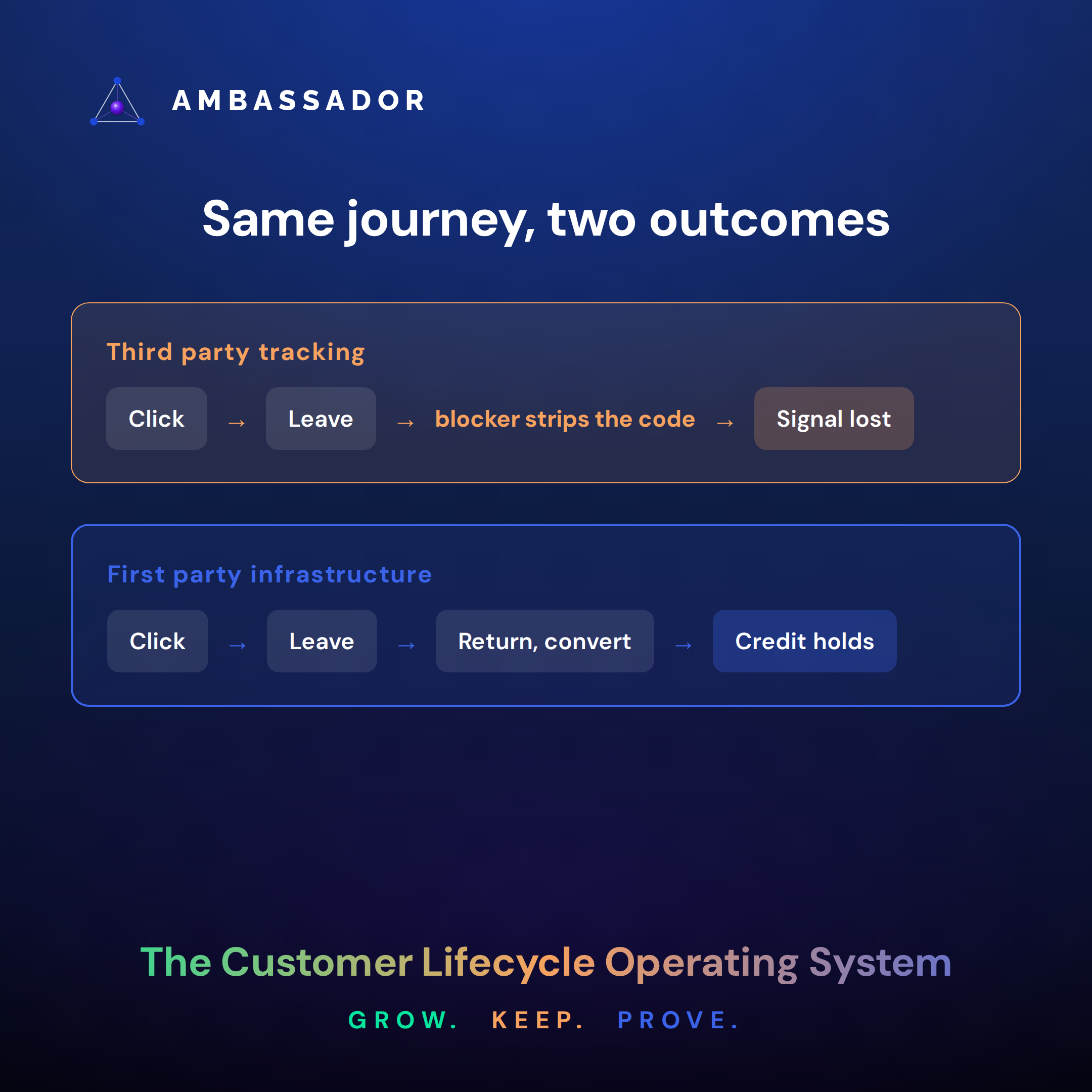
When that code cannot load, the connection breaks. Picture your best advocate. They share a referral link. Their friend clicks, browses, leaves, and comes back two days later on a different device to sign up. To you, that signup looks like it came from nowhere. Direct traffic. Unknown. The referral happened. You simply could not see it.
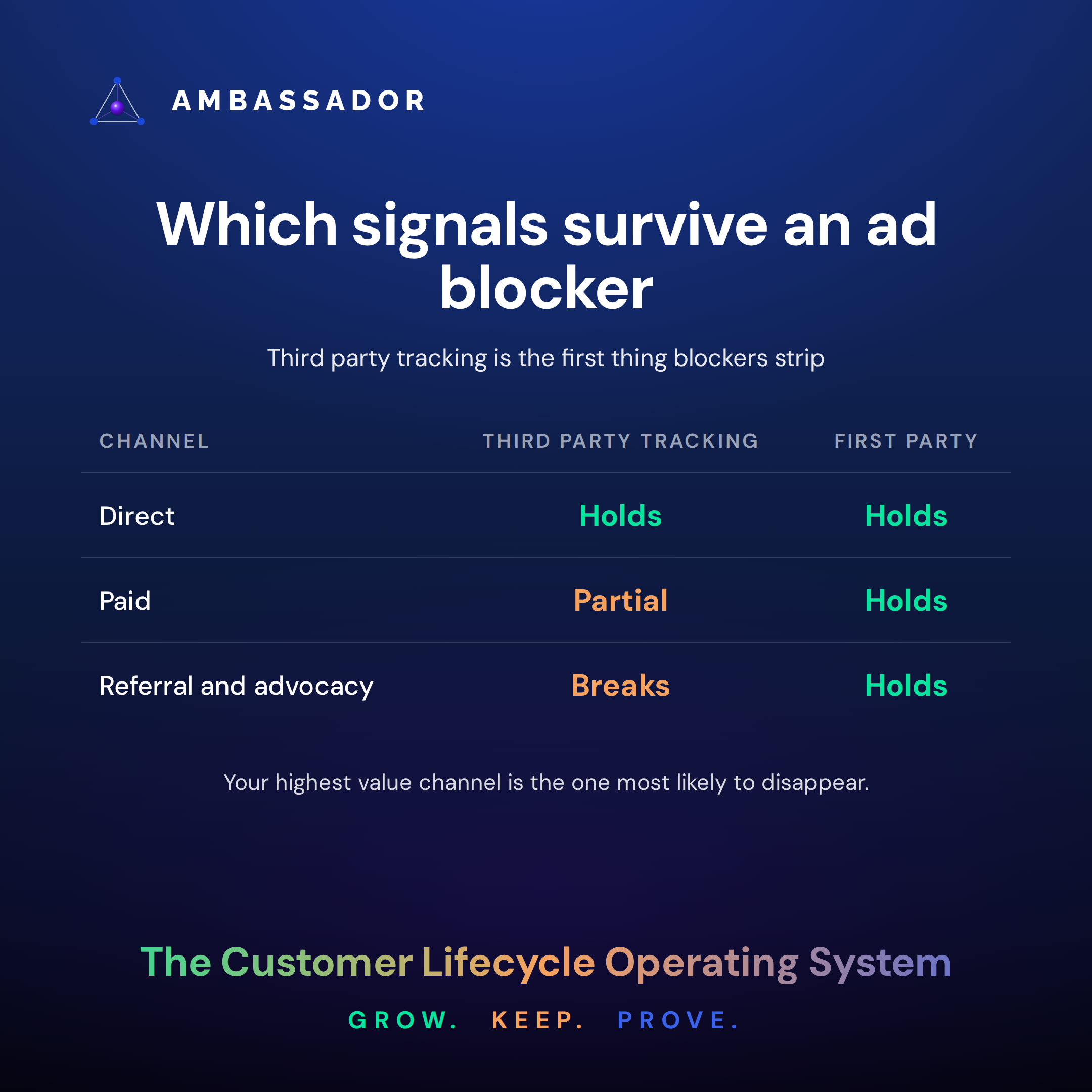
The channel that suffers most is the one running on exactly the kind of scripts blockers target: word of mouth and advocacy. Your highest-value channel, by economics, becomes your least-visible channel, by measurement. And what you cannot see, you underfund by accident.
You cannot dashboard your way out of this. The fix has to happen a layer down, in the infrastructure the measurement runs on. That is what custom domains do. Your Ambassador widgets now load from your own domain instead of a third-party one, so the code stops looking like the thing blockers are built to strip. It loads. The signal survives. The referral holds, and the credit lands where it was earned.
This is not a flashier chart. It is a more durable foundation underneath every chart you already have. In a market moving toward outcome-based pricing, where the whole model depends on proving the result, attribution that survives real-world browsing conditions stops being a nice-to-have.
Rolling out next: brand kits
The second update goes after a quieter kind of leak: inconsistency.
When your referral widget, your emails, and your program pages each look a little different, customers feel it even if they cannot name it. Off-brand touchpoints read as less trustworthy, and trust is the entire currency of advocacy. A referral only works if the person receiving it believes it is really from you.
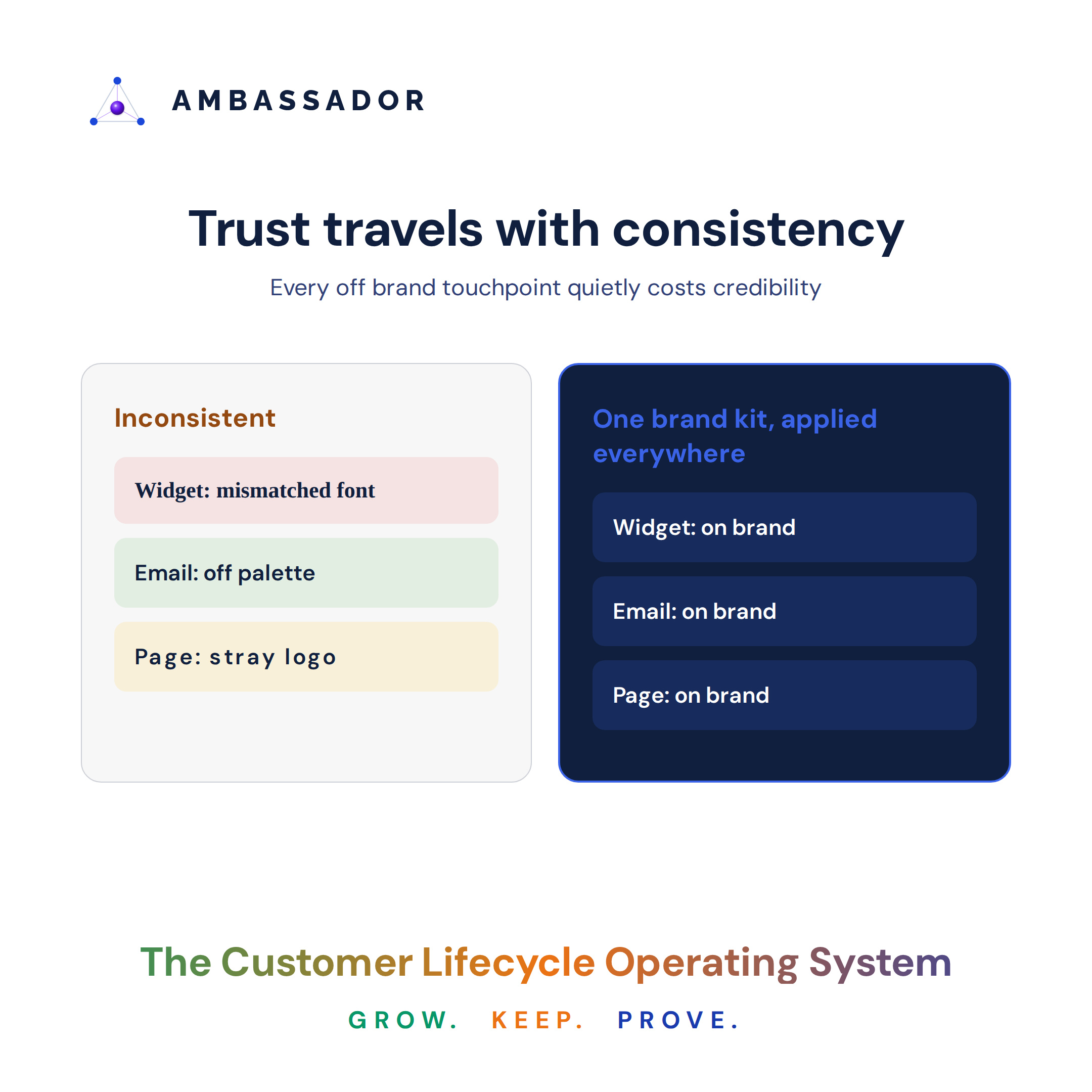
Brand Kits, rolling out now, make consistency a one-step decision. Define your logos, your color palette, and your fonts, including your own custom fonts, in a single place, then apply that kit across your emails, widgets, and other surfaces at once. Instead of rebuilding your look on every asset, you set it once and it carries everywhere. Consistent branding across the lifecycle is not a cosmetic nicety. It is part of the same trust story as attribution. One is about trusting the numbers. The other is about the customer trusting the experience. Both have to hold for the lifecycle to compound.
Where this fits
Both updates ladder up to a single idea: the customer lifecycle works best as one connected system rather than a stack of disconnected tools. Grow through advocacy and acquisition. Keep through retention and communication. Prove it with attribution that survives the conditions your customers actually browse in. When those pieces share a spine, the customer stops falling through the gaps between your systems, and the numbers you report become numbers you can defend.
Your best channel should not disappear because of a browser setting, and your brand should not fragment across the very touchpoints meant to build trust. With custom domains live and Brand Kits rolling out, neither has to.
GROW. KEEP. PROVE.