New brand. New features in your account. And a thesis on where this is all going that we think you need to read. Grab a coffee — this one's worth the scroll.
The flag is gone. Hiro is front and center.
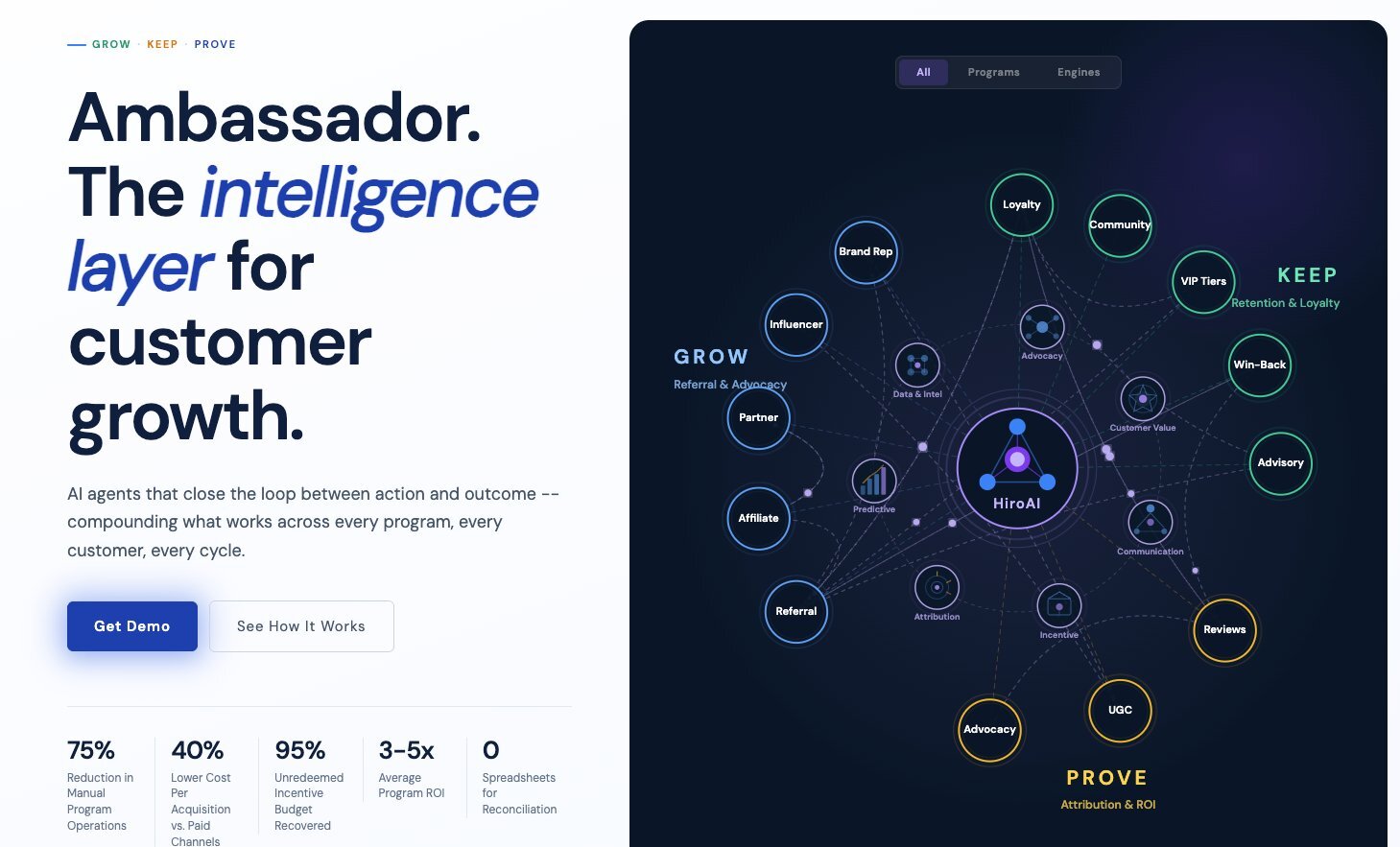
You may have noticed things looking different around here. We retired the Ambassador flag logo and put Hiro at the center of everything. This isn't a cosmetic refresh. It's a declaration about what this platform is becoming — and it directly impacts what you pay to run your growth function.
Hiro isn't a chatbot. It's not an "AI assistant." Hiro is the Agentic AI system that sits at the center of your customer operations — acting on your behalf, learning from every outcome, and getting smarter for you every single day. The rebrand puts Hiro front and center because that's where the value lives: AI agents powered by real customer context, not generic models running on guesswork.
And here's the thing most people in this space are getting wrong: the AI agent race everyone is talking about? It's already the wrong race. We'll explain why in a minute. But first, look at what you're building on.
Why this matters to your P&L
The growth, retention, and customer operations function costs $2–5M in annual headcount for a mid-market company. Ambassador is absorbing that function — not by cutting your team, but by making each person 10x more productive. Every feature we ship removes manual steps, reduces support load, and lets your team focus on strategy instead of execution. But the real question is: why can we do this and nobody else can? Keep reading.
Everyone's building AI agents. Almost everyone is getting it wrong.
There's a land grab happening right now. Salesforce launched Agentforce. Microsoft shipped Copilot Studio. OpenAI announced agent runtimes. Everyone is racing to build AI agents for enterprise. But here's what they're all missing: an agent without context is just expensive automation. It doesn't know your customers. It doesn't know what worked last quarter. It doesn't learn from what happened yesterday. It's a fast intern with amnesia — and you're paying for it every month.
"$500 billion in annual headcount is being replaced by AI agents. But agents without intelligence are just automation. The company that owns the intelligence wins everything."
— Ambassador AI Thesis, March 2026
The AI revolution in three waves. Most companies are stuck in Wave 2. You're already in Wave 3.
Wave 1 (foundation models) commoditized. Wave 2 (agent runtimes) is commoditizing right now. Wave 3 is the intelligence layer that feeds those agents — and it's the one thing that never commoditizes, because it's built from your proprietary outcomes, accumulated over time.
Wave 1 • Done
Foundation Models
GPT, Claude, Gemini. Cost dropped 98%. Everyone has access. No edge left.
Wave 2 • Commoditizing
AI Agents
Plumbing. Doesn't know your customers. Klarna cut 700 heads but agents without context are fast interns.
Wave 3 • You are here
Enterprise Context
Built from your outcomes, compounding over time. This is where the ROI lives and what every agent needs.
This is the piece everyone else is missing. Salesforce has customer records, not outcomes — their modules don't feed outcome data between each other. OpenAI and Google are building horizontal plumbing that doesn't know your industry. Klaviyo, Braze, YotPo, Extole — each owns one signal. You'd need five subscriptions, five integrations, and a full-time analyst, and you'd still never get a closed feedback loop. That's more OpEx, not less.
Ambassador is different because it was designed from the ground up as a closed-loop system. Action → outcome → learning → better action. Your cost-per-acquisition drops every cycle. Your retention actions get more precise every month. Your growth output increases without increasing your growth spend. That's the difference between renting someone else's AI and owning an intelligence asset that compounds.
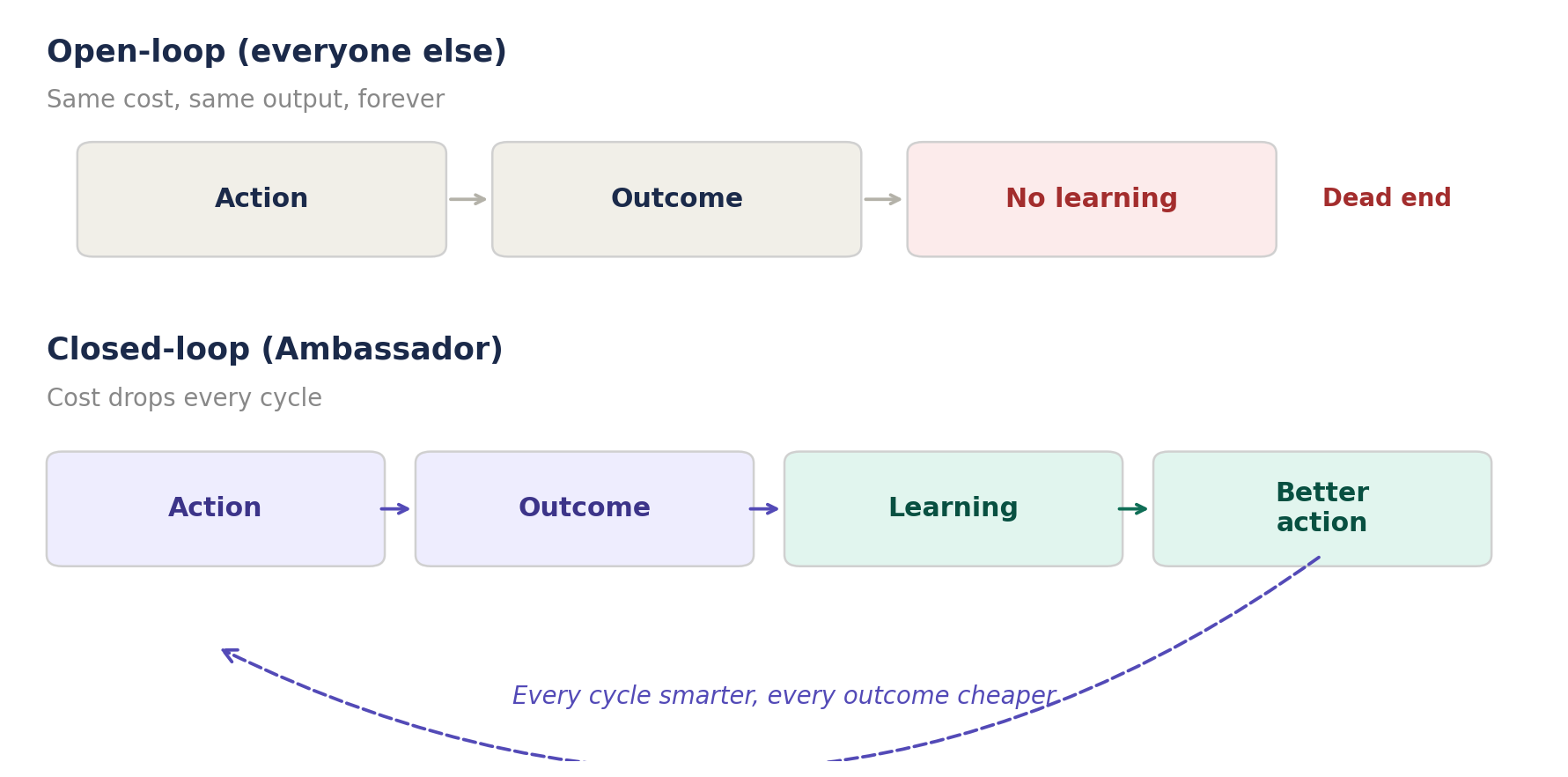
Here's what that means for your bottom line over 12 months:
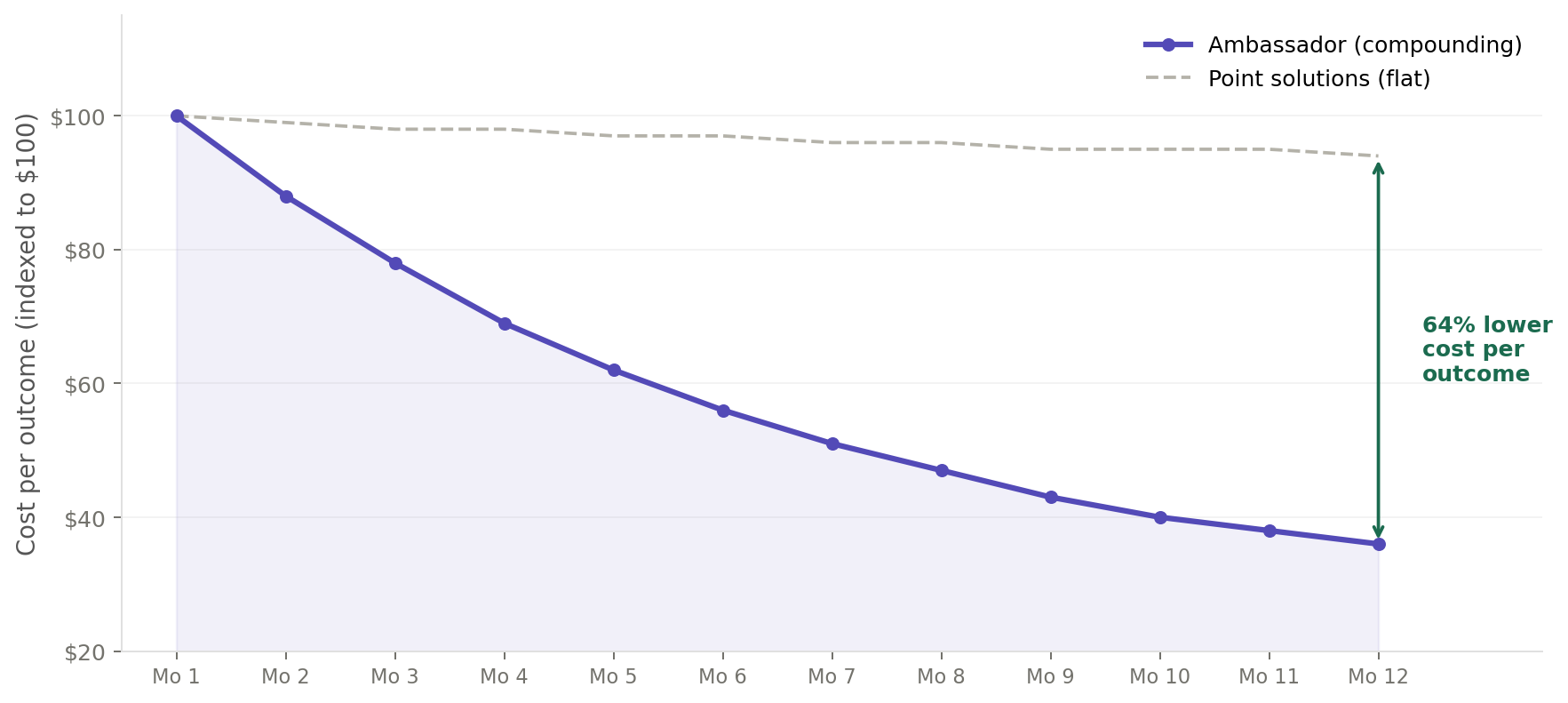
Your cost-per-outcome drops 64% in the first year while point solutions stay flat. That gap widens every month.
And if you're thinking "can't I just stitch together point solutions?" — here's what that actually costs:
Bloomberg built $100B on financial data context. Stripe built $65B on payment data context. The company that builds the equivalent for customer outcomes occupies the same structural position. You're on that platform. And every month you run, your intelligence advantage widens.
Still on Ambassador 2.0? Here's why the switch to 3.0 is urgent.
Ambassador 2.0 was a referral tool. A good one. But it was a single-engine system with manual workflows, static dashboards, and no feedback loop. It did what you told it to do and nothing more. Every month on 2.0 costs you the same as the month before — your team does the same work, your campaigns run the same playbooks, and your cost-per-outcome stays flat.
3.0 is a completely different architecture. Eight engines that share data. A closed-loop AI that learns from every outcome. Agentic workflows that execute while your team sleeps. Every month on 3.0, your system gets smarter, your cost-per-outcome drops, and your team's capacity expands — without adding headcount. The longer you wait to switch, the more compounding intelligence you're leaving on the table.
Every week we ship on 3.0, the gap between what 2.0 can do and what 3.0 delivers gets wider. The features below? They're only possible on 3.0. And they're live in your account right now.
That's the big picture. Now let's talk about what we shipped this week
Other platforms have roadmaps.
We have release notes.
Shipped this week
We just eliminated your most annoying onboarding step.
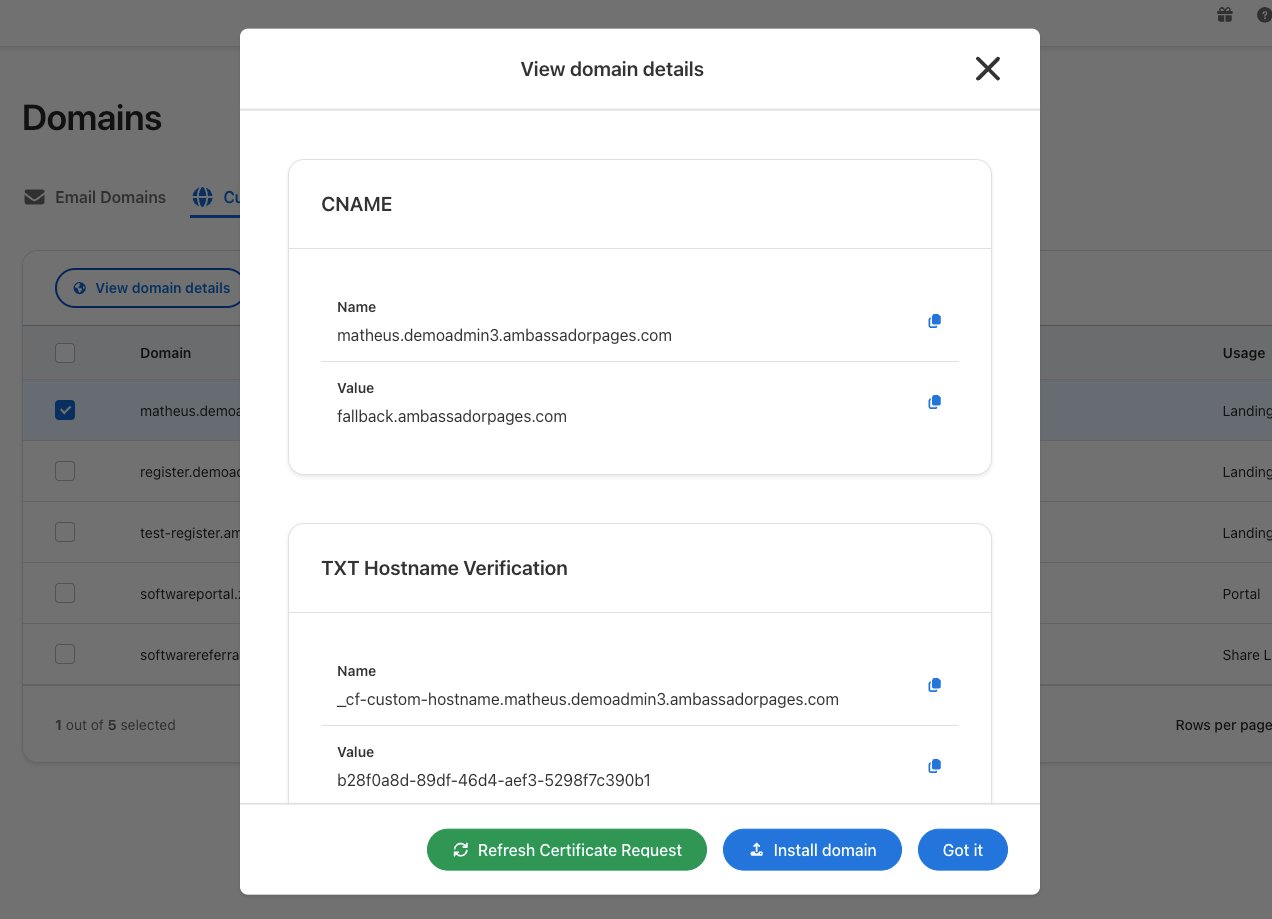
Speaking of reducing operational cost — DNS configuration has been the single highest-friction step in getting your program live. It creates support tickets, delays launches, and makes the platform feel harder than it is. We killed it. GoEntri handles your entire domain configuration through a guided, in-app popup. What used to take 45 minutes and a support ticket now takes 30 seconds and zero help from anyone.
45min
Saved per domain
0
Support tickets
24/7
Auto-monitoring
And it doesn't just set up your DNS — it watches it. Proactive monitoring catches certificate expirations and removed records, then sends you a one-click fix before your share links ever break. Zero downtime, zero emergency tickets, zero revenue lost. That's OpEx reduction you can feel this week. And it ties directly to the next thing we shipped.
Also shipped this week
A complete loyalty experience. No developers needed.
Before this release, building a branded loyalty portal meant hiring a developer, scoping a project, and waiting weeks. That's tens of thousands of dollars in dev costs and weeks of time. Now you configure it yourself in the widget editor in an afternoon. Seven configurable components — badges, tiers, tasks, progress bars, rewards catalog with 2FA, balance stat cards, onboarding steps — all ready in your account right now.
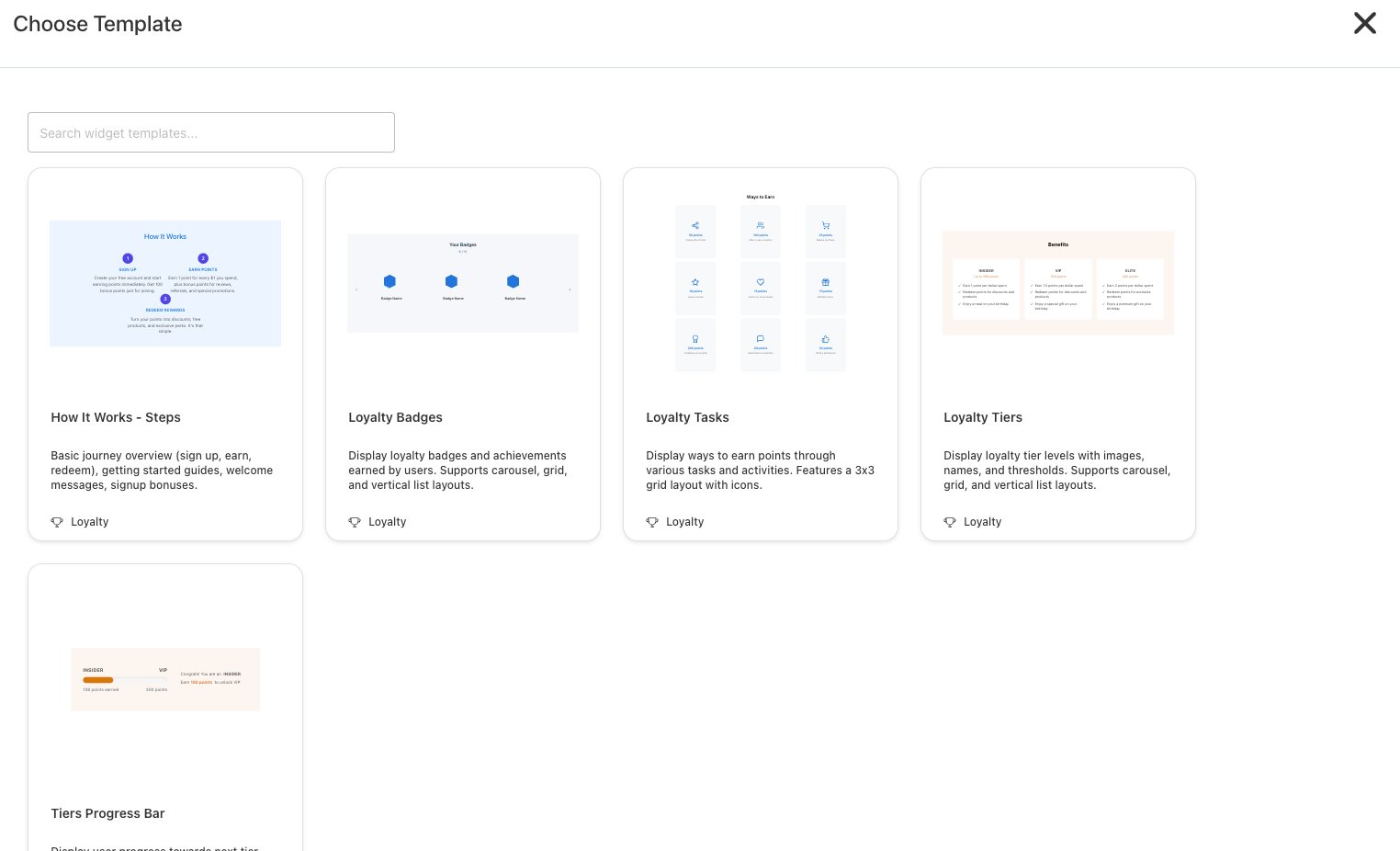
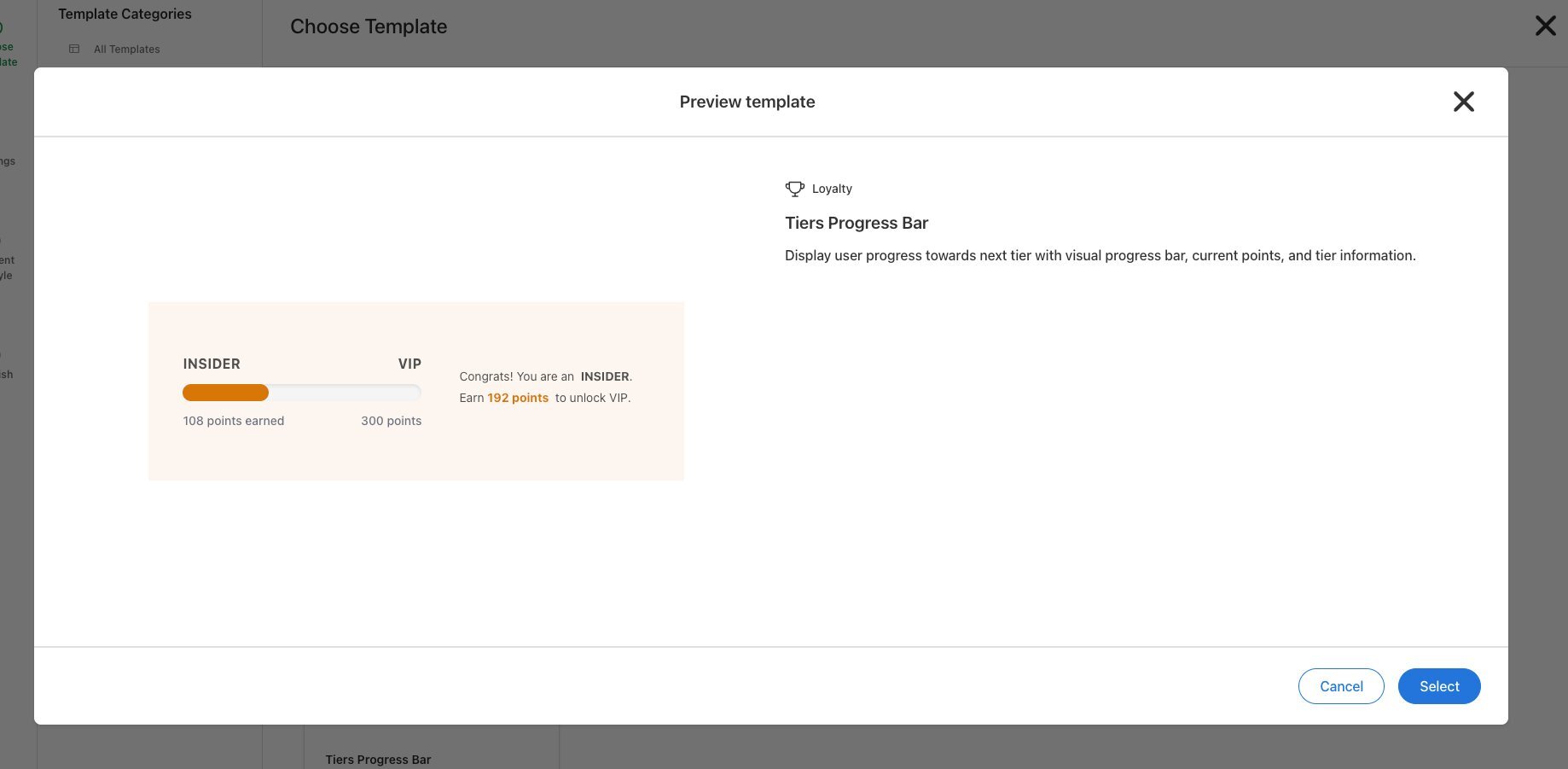
Self-service rewards redemption means less manual fulfillment work for your team. 2FA security means fewer fraud tickets. Responsive layouts mean no QA cycles. Higher engagement, lower support volume, and a loyalty program that runs itself. And this connects to the bigger point — every widget, every interaction, every redemption feeds the context layer that makes your entire system smarter.
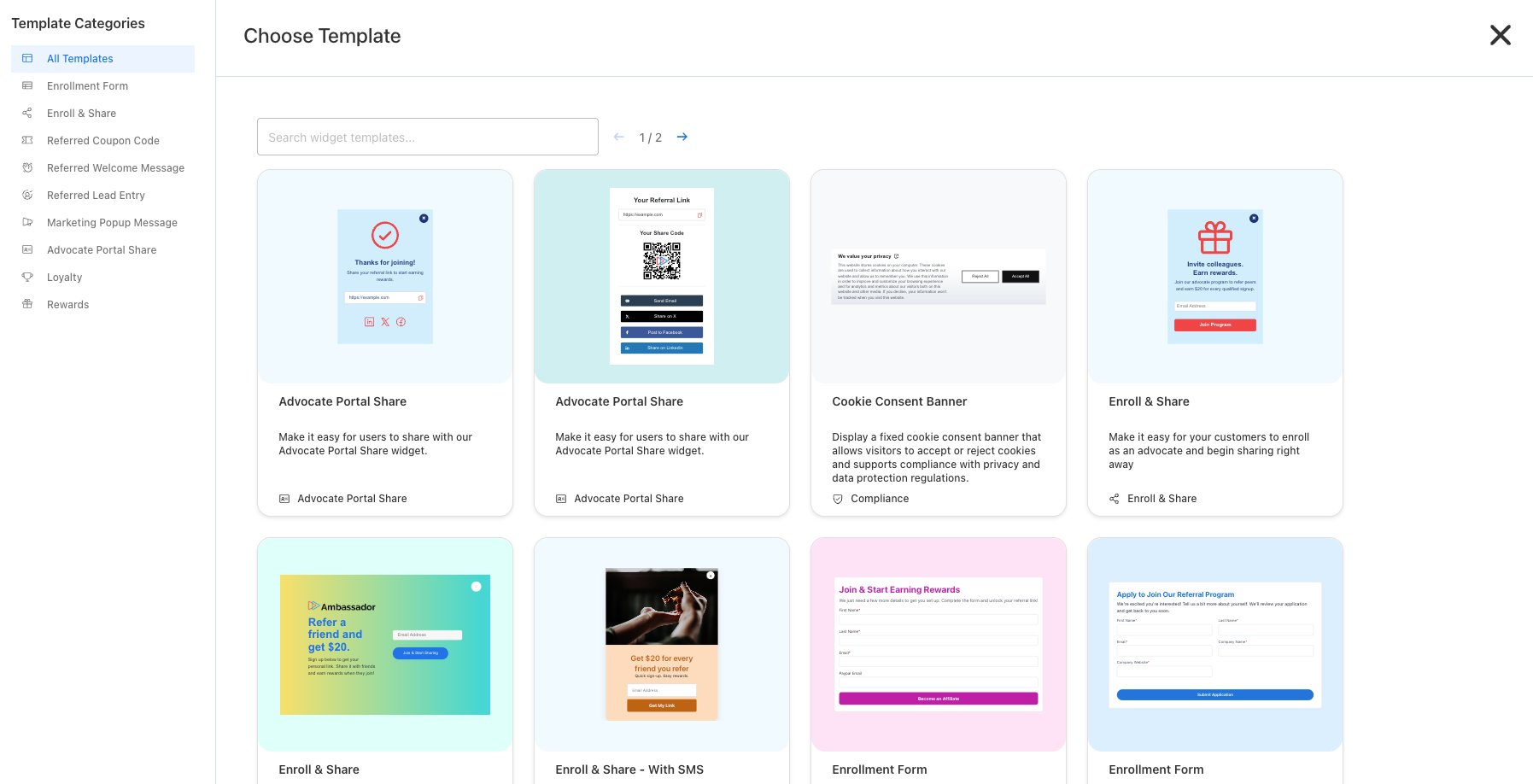
Now you've seen the vision and the features. Here's how it all fits together.
Eight engines. Five context layers. One AI that gets smarter for you every day.
Everything we've talked about — the rebrand, the AI thesis, the DNS integration, the loyalty widgets — it all connects here. Ambassador isn't a collection of features. It's eight interconnected engines that feed a shared intelligence layer. Each engine makes every other engine smarter. And Agentic AI — powered by real context from your outcomes — ties it all together.
Here's what each engine does for you and why they're more powerful together than any combination of point solutions:
Advocacy Engine
Turns your happiest customers into a referral pipeline. Identifies promoters, arms them with share tools, tracks every conversion. Your lowest-cost acquisition channel — and it feeds data to every other engine.
Retention Engine
Loyalty tiers, badges, tasks, and rewards — the widgets you just saw. Drives repeat engagement and identifies churn risk before it becomes churn. Data flows into predictive models.
Attribution Engine
Cross-session outcome tracking. Knows which touchpoints actually drove the conversion — not last-click guesswork. Eliminates wasted ad spend by showing you exactly what works.
Incentive Engine
Optimizes what you offer and to whom. Learns which reward types drive action in which segments, so you stop overpaying for outcomes you could get for less.
Predictive Engine
Forecasts churn risk, conversion likelihood, and lifetime value. The more engines feed it data, the more accurate it gets. This is what turns your AI from reactive to prescriptive.
Communication Engine
Email, SMS, in-app messaging — timed and targeted based on what the other engines know about each user. No more batch-and-blast. Every message is context-aware.
Prospect Engine
Identifies and engages potential advocates before they convert. Uses pattern data from the network to spot high-value prospects in your pipeline.
Finance Engine
Connects every action to revenue impact. ROI tracking at the program, campaign, and individual level. Your CFO can see exactly what every growth dollar produces.
None of these engines exist in isolation. Your advocacy data sharpens your predictive models. Your retention signals tune your incentive optimization. Your attribution data makes your communication timing smarter. And all of it feeds five compounding context layers — from raw data up to the Customer Outcome Graph that no competitor can replicate:
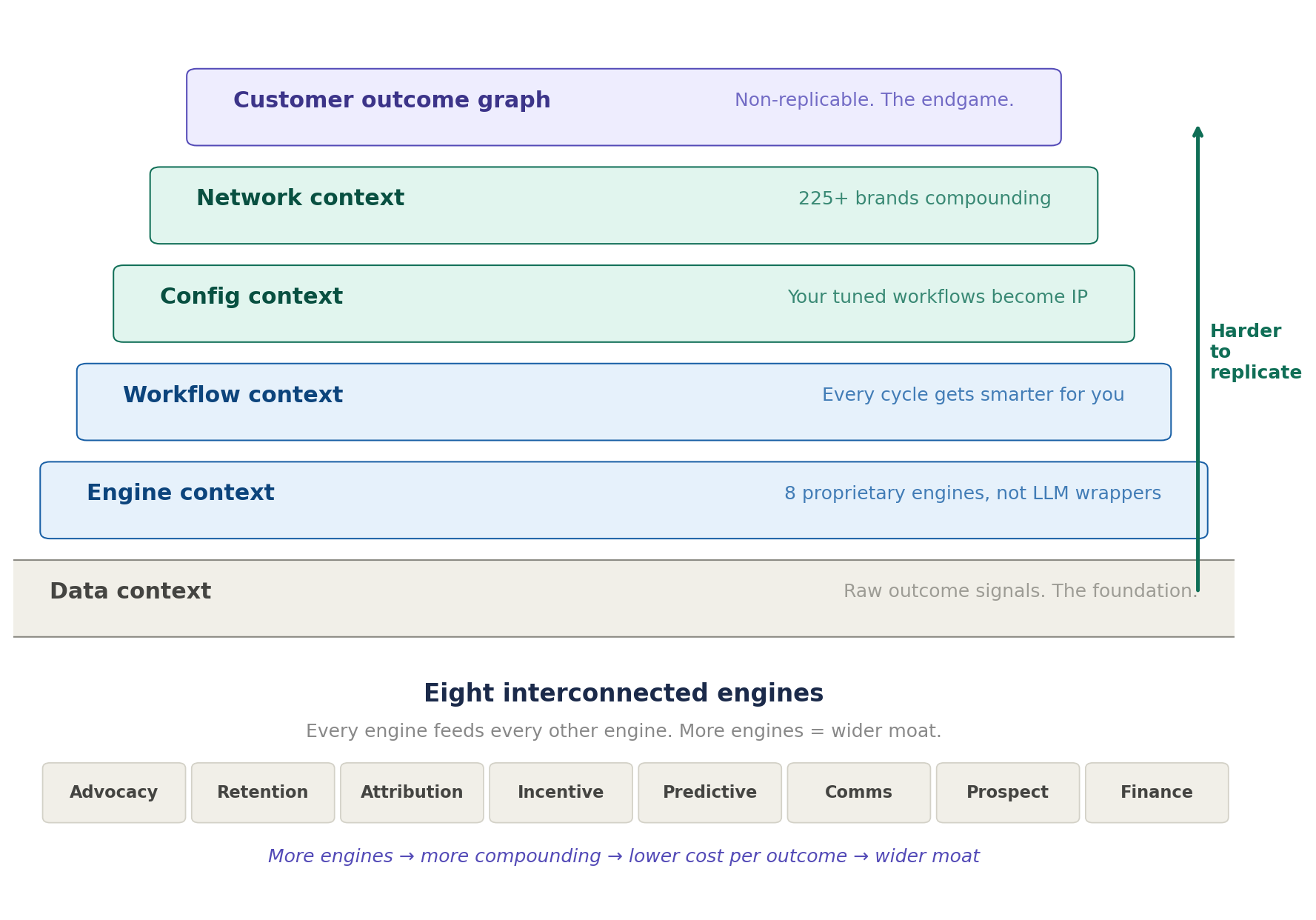
This is what Agentic AI built on real context looks like. Not a chatbot bolted onto a CRM. Not an automation layer that runs the same playbook every month. A compound system where every interaction across every engine makes the next action smarter and your cost-per-outcome lower. And it's running in your account right now.
We're not slowing down.
New brand. Agentic AI at the center. A DNS step that takes 30 seconds instead of 45 minutes. A loyalty portal you build without a developer. Eight engines compounding intelligence across five context layers. And a cost-per-outcome that drops every month you run. This is what shipping every week looks like. Next week there's more.